A CNC machine that gets damaged in transit doesn’t just cost the repair bill. It costs every production run scheduled behind it, every order that slips a delivery date, and every hour your floor supervisor spends explaining the delay to a client. That’s the real weight behind a machinery moving checklist for industrial plants — it’s not paperwork for its own sake, it’s the difference between a relocation that costs you a weekend and one that costs you a quarter. We’ve put together this checklist from what actually goes wrong on plant moves, not a generic list copied from a textbook. If you’re planning to shift a single machine or an entire production line, this is what you need to check before, during, and after the move.
Why a Checklist Matters More Than People Think
Most plant managers assume machinery moving is mainly a transport problem — get a big enough truck, load the machine, drive it to the new site. In practice, transport is the easy part. The risk sits in everything around it: whether the floor at the new site can actually bear the load, whether the machine needs to come apart before it fits through the door it’s going out of, whether the rigging points on a twenty-year-old machine are still rated for what the manufacturer originally specified. A checklist forces you to answer these questions before the crane shows up, not while it’s idling in the yard.
Pre-Move Site Assessment
Before anything gets touched, both the current site and the destination need a proper walk-through.
- Machine dimensions and weight — Get exact figures, not estimates. A miscalculated weight is the single biggest reason rigging plans fail on the day.
- Floor load capacity at the destination — Heavy machines like stamping presses or injection molding units can exceed what a standard factory floor is rated for. Check this with structural drawings if they exist, or get an engineer to verify.
- Ceiling height and overhead clearance — Crane booms and lifted machinery both need vertical space. Overhead cranes, sprinkler lines, and electrical conduits are common casualties of a rushed assessment.
- Doorways, corridors, and turning radius — Measure every doorway and corner the machine has to pass through. If it doesn’t fit as-is, this tells you disassembly is required before moving day, not something to discover on the day itself.
- Access for trucks and cranes — Confirm the destination site can actually get a flatbed or crane truck close enough to the building. Narrow lanes, low bridges, or weight-restricted roads on the route matter just as much as the site itself.
Risk Assessment and Permits
- Identify hazards specific to the machine — Pinch points, unstable centre of gravity, hazardous residues (coolant, oil, chemical process residue) that need to be cleared before the machine is touched.
- Oversized load permits — If the machine’s dimensions exceed standard road transport limits, you’ll need permits and possibly a pilot/escort vehicle. This takes time to arrange, so start early.
- Insurance coverage — Confirm what’s covered during disassembly, transport, and reinstallation. A move that isn’t insured for its full replacement value is a risk most plants don’t need to take.
- Route survey — Check the planned route for height restrictions, weight-restricted bridges, and any construction or closures that could force a detour mid-move.
Disassembly and Documentation
- Follow manufacturer guidelines — If service manuals exist, they usually specify the correct disassembly sequence and any torque or calibration values you’ll need to match during reinstallation.
- Label every component — Every bolt, panel, and cable should be tagged before it comes off. A machine with fifty unlabelled parts is a reassembly nightmare waiting to happen.
- Photograph each stage — Take photos before disassembly begins and at every major step. This is the single easiest way to avoid confusion during reassembly, especially weeks later at a new site.
- Lockout/tagout procedures — Electrical, hydraulic, and pneumatic systems need to be safely shut down and isolated before anyone starts working on the machine. This isn’t optional — it’s the step most directly tied to worker safety.
- Fluid management — Drain or properly secure hydraulic oil, coolant, and lubricants depending on the equipment. Some fluids need to be disposed of according to local regulations rather than simply drained on-site.
Rigging and Lifting Plan
- Identify correct rigging points — Use the points the manufacturer designates, not wherever looks convenient. Lifting from the wrong point can warp a frame or crack a housing that isn’t built to bear that load.
- Match lifting capacity to machine weight — Whether you’re using a crane, forklift, or hoist, the rated capacity needs headroom above the actual weight, not just enough to technically lift it.
- Plan for weight distribution — Slings, chains, and spreader bars need to be arranged so the load doesn’t tip or swing once it’s off the ground. This matters more on irregularly shaped machines than on simple rectangular loads.
- Critical lift planning — If the lift involves two or more lifting sources, or the load is close to the rated capacity of your primary equipment, this needs a documented safe-lift plan, not an on-the-spot decision.
- Clear the lift area — Barricade the space and make sure everyone nearby knows a lift is in progress. Most rigging accidents happen because someone wandered into a zone they didn’t realise was active.
Packing and Protection
- Custom crating for sensitive components — Control panels, precision components, and anything with calibration sensitivity should go in purpose-built crates, not general-purpose boxes.
- Cushioning against vibration and impact — Foam padding, corner protection, and shock-absorbing mounts reduce the chance of misalignment during a long transport route.
- Weatherproofing — If the move involves outdoor loading or a longer transit time, shrink wrap or vapor corrosion inhibitors protect metal components from moisture damage.
- Secure loose parts — Anything that can move — arms, blades, attachments, cabling — should be locked down or removed before transport, not left to rattle loose in transit.
Transport
- Choose the right vehicle — Flatbeds, lowboy trailers, or specialized transporters depending on machine size and ground clearance requirements. Air-ride suspension reduces shock on longer routes.
- Secure the load properly — Chains, straps, and clamps rated for the actual weight, with additional bracing or blocking where the load could shift laterally.
- Track the shipment — For longer routes, GPS tracking gives you visibility into where the machinery is at any point, which matters more than people expect when a production schedule is riding on the delivery date.
- Plan for weather and traffic contingencies — Build buffer time into the schedule. A move that’s timed to the hour with no slack is a move that falls apart the first time there’s a delay on the highway.
Loading and Unloading
- Use trained operators — Forklift and crane operators handling this load should be specifically experienced with heavy machinery, not general warehouse staff filling in.
- Match equipment to the task — Forklifts work for mid-sized machines within their rated capacity, but heavier or taller equipment usually needs a crane or gantry system instead.
- Communicate clearly during the lift — Clear verbal signals or radio communication between the operator and ground crew prevents the miscommunication that causes most loading accidents.
- Inspect on arrival — Before the machine is even unloaded, do a visual check for any transit damage. If something did happen in transit, you want it documented immediately, not discovered during reinstallation.
Reinstallation and Calibration
- Reassemble using your documentation — The labels and photos from the disassembly stage should guide this process directly, in the same sequence, just reversed.
- Reconnect utilities carefully — Electrical, hydraulic, pneumatic, water, and compressed air connections need to be re-established and checked before the machine is powered on.
- Precision alignment — Laser leveling, dial indicators, or precision jacks bring the machine back to the tolerances it needs to operate correctly. Skipping this step is a common reason machines run but produce inconsistent output after a move.
- Test before full operation — Run the machine through its paces at low load before putting it back into full production. This catches alignment or calibration issues while they’re still cheap to fix.
- Train the team on any changes — If the machine’s setup or environment has changed even slightly, a short refresher for the operators reduces the chance of an early mistake.
Post-Move Review
- Conduct a review with your team — What went smoothly, what didn’t, and what you’d change next time. This matters even more if your plant relocates equipment periodically rather than as a one-off event.
- File any damage claims immediately — If anything was damaged in transit, get documentation and file the claim promptly rather than waiting until it becomes a dispute.
- Update your equipment records — New location, reinstallation date, and any recalibration values should go into your maintenance records so the next person working on that machine has accurate history.
Machinery Moving Timeline: What to Expect
For a local, intra-city move, transport itself can usually be completed in one to three days once planning is done. Cross-state or long-distance relocations, especially where oversized load permits or multiple machines are involved, can take one to two weeks or more. Testing and calibration after reinstallation typically adds another two to five days per unit, depending on the complexity of the equipment. Building this timeline into your production schedule upfront avoids the scramble of an unplanned extension mid-move.
How Jangra Logistics Handles Industrial Machinery Moves
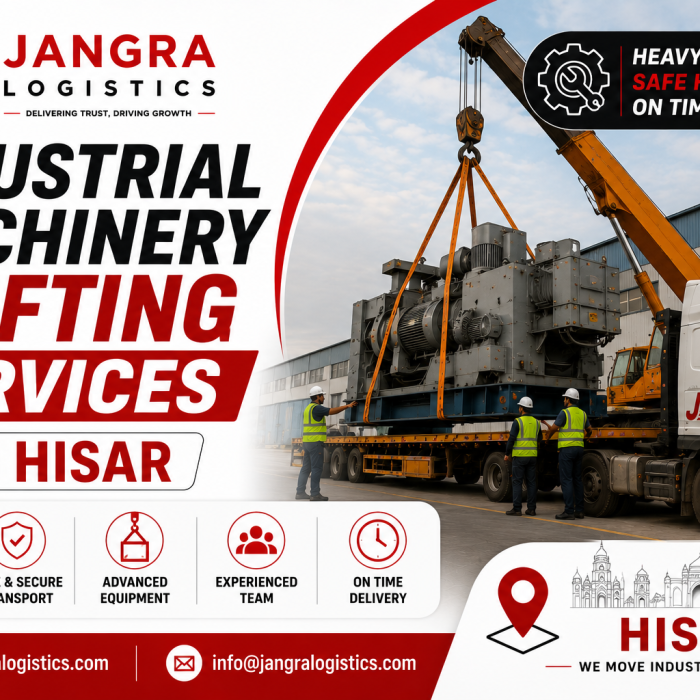
We work with manufacturing units across Haryana’s industrial belt — from steel and pipe manufacturers in Hisar to precision component units near Bhiwani, Rohtak, and the Delhi-NCR industrial corridor — on exactly this kind of relocation. Our teams handle the site assessment, rigging and lifting plan, lashing and chocking for transport, and reinstallation support, working from the same checklist principles above rather than treating your move as a generic loading job.
We also supply heat treated, ISPM 15 compliant pallets and crating for machinery components headed for export, and handle the documentation that customs typically asks for on those shipments. If your plant relocation involves both domestic transport and export components, we can plan both under one schedule instead of coordinating two separate vendors.
Frequently Asked Questions
What is the biggest risk in an industrial machinery move?
Miscalculating weight or rigging points is the most common cause of failed lifts and equipment damage. A proper pre-move assessment with accurate dimensions and weight prevents most of the serious problems.
How long does a typical machinery relocation take?
Local moves usually take one to three days for the transport phase. Long-distance or multi-machine relocations can take one to two weeks or more, plus additional time for testing and calibration after reinstallation.
Do I need permits to move heavy machinery?
If the machine’s dimensions exceed standard road transport limits, yes — you’ll need an oversized load permit and possibly an escort vehicle. This should be arranged well before the move date.
Should machinery be insured separately for the move?
Yes. Standard facility insurance often doesn’t cover equipment in transit or during disassembly and reinstallation. Confirm coverage specifically for the relocation period before the move starts.
What documentation should I keep during disassembly?
Labelled components, photographs at every disassembly stage, and torque or calibration values from the manufacturer’s manual. This documentation is what makes reassembly fast and accurate.
Can Jangra Logistics handle both the moving and the export packing?
Yes. We handle machinery relocation, rigging, lashing and chocking, and can also supply ISPM 15 certified pallets and export documentation if part of your equipment is being shipped abroad.
What happens if machinery is damaged during transport?
Document the damage immediately with photos, notify your insurer, and file a claim without delay. Working with a mover who tracks the shipment and inspects on arrival makes this process far faster if it’s ever needed.
Planning a Plant Relocation? Talk to Jangra Logistics
A machinery move that goes wrong rarely fails at one single point — it’s usually a chain of small gaps that a proper checklist would have caught. If you’re planning to relocate a single machine or an entire production line, working through this list before you book a truck will save you more time than the checklist itself takes to complete. Call or WhatsApp Jangra Logistics to talk through your specific move, and we’ll help you plan it against exactly these steps.
Looking for the best packers and movers for your business or household move? Visit the Jangra Logistics homepage to see our full range of services across India.