A ginning machine doesn’t move like a sofa. Neither does an oil expeller, a carding unit, or a punching press sitting in a sports goods workshop near Rohtak Road. These machines are heavy, often bolted to a foundation for years, and built with internal parts that can shift or crack if the whole thing gets tilted the wrong way during a lift. Bhiwani runs on exactly this kind of equipment — cotton and textile mills, edible oil units, and engineering workshops that supply the city’s sports goods industry — and yet a lot of local transporters still treat a machine move the same way they’d treat moving furniture. Load it, tie it down, drive carefully, hope for the best.
That approach works fine for a cupboard. It doesn’t work for a machine worth lakhs of rupees, one that needs to run correctly the day it’s reconnected at the new location. This post covers what proper heavy machine packaging and moving actually looks like, why Bhiwani’s specific industries need it done right, what the process involves step by step, what it costs, and how to find a team that treats your machinery like the asset it actually is.
What Does Heavy Machine Packaging and Moving Actually Mean?
It’s the combination of two things that have to happen together for a machine to survive a move undamaged and reach its destination ready to work: proper packaging around the machine itself, and careful, planned handling during the actual lift, load, and transport.
Packaging means building a custom skid or crate around the machine’s exact shape and weight, with bracing at every point that could shift or get damaged in transit. Moving means the physical process of dismantling where needed, lifting with the right equipment, loading securely, transporting, and then reassembling and aligning the machine correctly at its new location. Skip either half of this, and you’re taking a real risk with something expensive to replace.
Why Bhiwani’s Industries Need This Done Properly
Textile and cotton processing machinery is heavy and precision-built. Ginning machines, carding units, and spinning frames have moving parts that are calibrated to work together. A rough move can knock components out of alignment in ways that aren’t visible until the machine is running again and producing uneven output.
Edible oil and agro-processing equipment carries its own risks. Oil expellers and processing units often have internal components that need draining or securing before a move — skip this step, and you’re not just risking damage, you’re risking a mess and a safety hazard during transport.
Sports goods manufacturing runs on smaller but still delicate machinery. Cutting machines, stitching units, and moulding presses used in Bhiwani’s sports equipment workshops need careful handling even though they’re lighter than mill-scale machinery — precision components inside them are just as sensitive to a bad drop or a hard jolt.
A lot of this machinery is old and irreplaceable at short notice. Many units in Bhiwani run machines that have been in operation for years, sometimes with parts that aren’t easily available anymore. Damage during a move isn’t a quick fix — it can mean weeks of downtime waiting for a repair or replacement part.
The Full Process: How Heavy Machine Packaging and Moving Should Work
1. Site survey and load assessment. Someone needs to see the machine in person, note its weight, dimensions, and center of gravity, and check the access at both the pickup and drop locations before anything else happens.
2. Draining and securing internal components. For machines with oils, coolants, or other fluids — common in oil mill equipment and some engineering machinery — these need to be drained or secured properly before the machine moves, both for safety and to avoid contamination or leakage.
3. Dismantling where required. Panels, guards, or attachments that add unnecessary width, height, or weight often need to come off first. This step needs someone who understands the machine’s build, not just someone handy with tools.
4. Building a custom skid or crate. The machine gets mounted on a purpose-built wooden or steel base, sized and braced to its exact shape and weight, with bracing at every point that could shift during transit.
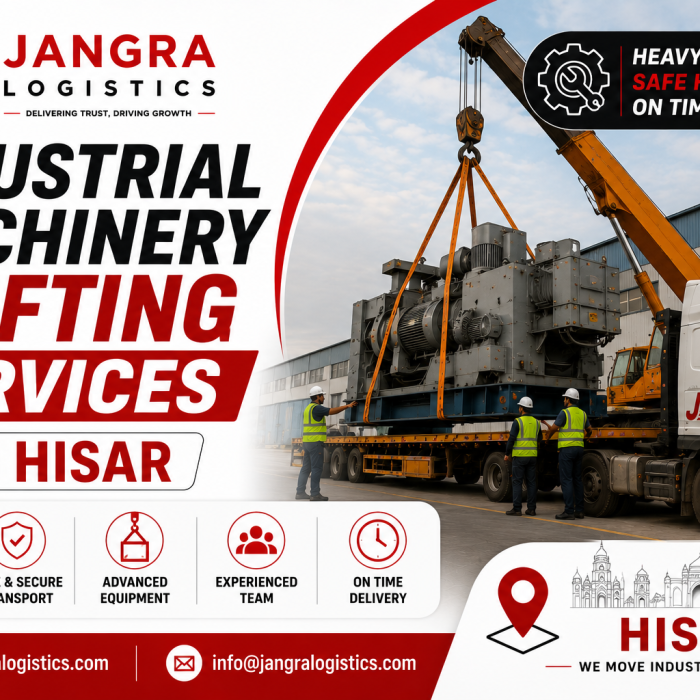
5. Rigging and lifting. Depending on the machine’s weight, this might mean a hydraulic jack, a gantry, or a crane — the lifting points are chosen based on where the machine can actually bear weight safely, not the most convenient spot to grab.
6. Loading and securing for transport. The crated or skidded machine goes onto the right vehicle and gets strapped down with rated chains or bands — not standard rope, which simply isn’t built for this kind of load.
7. Transport. For moves within Bhiwani or to nearby towns, this is usually straightforward; for longer or interstate routes, permits may be needed for oversized or overweight loads.
8. Unloading and positioning at the new location. The machine gets lowered into its exact spot, often requiring precise alignment, especially if it needs to connect to an existing production line or foundation.
9. Reassembly and final check. Any dismantled parts get put back, and the machine gets checked before the job is considered complete — not just left running and hoped for the best.
Common Mistakes That Damage Machinery During a Move
- Skipping the site survey and guessing weight or access, which leads to using the wrong lifting equipment
- Not draining fluids from oil mill or processing machinery before transport
- Using ropes instead of rated chains or straps to secure the load
- Rushing dismantling, which can damage parts that were protected by a panel that came off carelessly
- Loading onto a vehicle without checking floor strength or space for the machine’s actual footprint
- Skipping insurance on high-value machinery, leaving the full cost of any damage with the factory owner
- Choosing the lowest quote without asking whether it actually includes a site survey, proper rigging equipment, and trained riggers — the savings usually disappear the moment something goes wrong
Every one of these is avoidable with a proper site assessment and the right equipment — which is exactly the part a rushed job usually skips.
Cost of Heavy Machine Packaging and Moving in Bhiwani
| Factor | Approx. Cost Range |
|---|---|
| Packaging only (skid/crate build, small-medium machine) | ₹4,500 – ₹12,000 |
| Packaging only (large machinery) | ₹12,000 – ₹28,000 |
| Rigging and lifting (per machine, based on weight) | ₹5,000 – ₹20,000+ |
| Local transport within Bhiwani | ₹3,000 – ₹10,000 |
| Full service (packaging + rigging + transport, local) | ₹15,000 – ₹40,000+ |
There’s no honest flat rate without seeing the machine and the site. A heavy but easily accessible machine can sometimes cost less to move than a lighter one stuck behind a narrow doorway or up a flight of stairs. We give a written estimate after a site visit, not a guess over the phone.
Areas We Cover in Bhiwani
Units around Rohtak Road and Hisar Road are within our regular coverage zone, and our team is already familiar with the industrial pockets along both routes.
Charkhi Dadri Road and Tosham Road businesses get the same on-site assessment before any pricing gets confirmed — no guessing over a phone call.
Prem Nagar and Vidya Nagar households and small businesses can reach us for smaller-scale machine moves, like a workshop machine or heavy commercial equipment.
Cotton and textile units near the city’s mill areas get manpower and equipment specifically suited for ginning and processing machinery, not general labour unfamiliar with this kind of load.
Wherever your machine is sitting in Bhiwani — factory floor, workshop, or godown — you’re within reach. Call us and we’ll confirm for your location.
Heavy Machine Moving Near Me in Bhiwani
When you search “heavy machine moving near me in Bhiwani,” Jangra Logistics is the name that shows up — and for good reason. We’re a genuinely local team based in this region, not a broker sending your job to a random subcontractor. Our team can usually visit for a site assessment the same day you call, and we respond within the hour of your inquiry. Whether you need machine packaging near Rohtak Road, rigging help near Hisar Road, or moving support near any other part of Bhiwani — we’re already close by. With Jangra Logistics, you get hyperlocal service backed by the equipment and experience a heavy machine move actually needs.
Shifting a Machine Beyond Bhiwani? We Cover That Too
A lot of machine moves connect to a bigger relocation, whether that’s a short trip to a nearby town or a longer haul to another state. We handle both:
Bhiwani to Charkhi Dadri — A short, frequent route for local industrial equipment moves.
Bhiwani to Hisar — Regular route for engineering and textile machinery moving between these two industrial centers.
Bhiwani to Rohtak — Common corridor for machinery and equipment supply routes.
Bhiwani to Delhi and beyond — For longer hauls, including export-linked shipments routing through Delhi, we handle permits, rigging, and transport as one coordinated job.
All intercity machine moves come with proper securing, optional transit insurance, and one dedicated point of contact from pickup to delivery.
If your machine move is part of a larger factory relocation or production line shift, our industrial shifting services team can manage the entire job — machinery, racks, raw material, and the paperwork industrial clients usually need — as one connected process instead of separate vendors handling different pieces.
Frequently Asked Questions
How is heavy machine moving different from regular packers and movers services? Regular movers handle furniture and household goods. Heavy machine moving needs load assessment, rigging equipment, and often dismantling and reassembly — a different skill set and different tools entirely.
Do you provide the crane or lifting equipment, or do we need to arrange it? We arrange whatever the machine actually needs based on its weight and the site conditions, confirmed during our site survey before the job starts.
Can you move machinery that’s bolted to a foundation? Yes. This usually needs careful dismantling from the foundation first, which our team handles as part of the full process, not as an afterthought.
What happens to fluids or oils inside the machine before a move? These need to be drained or properly secured before transport, both for safety and to prevent leakage or contamination. We handle this as a standard step for relevant machinery.
How long does a typical heavy machine move take in Bhiwani? A local move can often be completed within a day, depending on machine size and dismantling needs. We’ll give you a real timeline after the site survey, not a guess.
Can you handle machinery for the sports goods industry specifically? Yes. Cutting machines, stitching units, and moulding presses common in Bhiwani’s sports goods workshops are handled with the same careful process, adjusted for their specific size and sensitivity.
Is insurance available for machinery during the move? Optional transit insurance is available based on the machine’s declared value, covering accidental damage or loss during the move. We’ll explain the coverage clearly at booking.
Do you handle interstate machine moves from Bhiwani, not just local ones? Yes. Interstate moves may need transport permits for oversized loads, which we handle as part of the job when required.
What if my machine doesn’t fit through an existing door or gate? This is exactly why a full site survey happens before moving day, not during it. If access is tight, we plan for partial dismantling or an alternate method in advance.
Can you handle reassembly and alignment at the new location, or just the move itself? Yes, reassembly and alignment are included as part of the job for production machinery especially, since correct positioning matters just as much as the move itself.
Get Your Machine Moved Safely From Bhiwani
Don’t risk expensive, hard-to-replace machinery on a rushed job with the wrong equipment. Tell us what you’re moving, where it’s headed, and our team will schedule a site survey and give you a written estimate — not a guess. Call us or send your machine details on WhatsApp, and we’ll start planning the move properly.