Heavy Machinery Moving Guide: What Every Factory Owner Should Know Before the Truck Arrives
A CNC machine doesn’t care that you’re in a hurry. Neither does a boiler, a generator, or a 15-ton press. Move any of these the wrong way and you’re not looking at a scratched surface — you’re looking at a bent shaft, a cracked casting, or a machine that needs re-calibration before it can run again. That’s a repair bill, plus every single day of production you lose while it sits idle.
Most factory owners only think about heavy machinery moving once — when they’re actually shifting units, upgrading a plant, or relocating to a bigger shed. By then, there’s usually a deadline already breathing down their neck. This guide is here so you know what actually goes into moving heavy machinery properly, what questions to ask before you hire anyone, and where the real risks hide — before your machine is already halfway onto a truck with the wrong rigging under it.
What Counts as “Heavy Machinery” for Moving Purposes?
Not every big object needs the same treatment, so it helps to know where your equipment falls.
- Production machinery — CNC machines, lathes, presses, injection moulding machines, packaging lines
- Power equipment — generators, transformers, compressors, boilers
- Material handling equipment — forklifts, cranes, conveyor systems
- Heavy structural units — steel frames, industrial racks, tanks, silos
If a piece needs more than four people to lift it, can’t be tilted more than a few degrees without damage, or has delicate internal parts (motors, circuit boards, calibrated components), it falls under heavy machinery moving — not standard loading and unloading.
Why Heavy Machinery Moving Is a Different Job Entirely
A household mover knows how to wrap a sofa. That skill set doesn’t transfer to a 10-ton lathe, and here’s why.
Weight distribution is not guesswork — it’s calculation. Every machine has a center of gravity, and if you lift or load it from the wrong point, it can tip, crack its base, or damage the very components it’s built around. A proper move starts with knowing the exact weight and where that weight sits, not eyeballing it.
Dismantling has to happen in the right order. Some machines need to be partially dismantled before they can be moved — panels removed, moving parts locked, fluids drained. Do this in the wrong sequence and you risk damaging a part that was never meant to bear weight during transport.
The route matters as much as the truck. A machine that fits through your factory gate might not fit under a low bridge on the way, or through the narrow lane leading to a customer’s new unit. Route survey isn’t optional for anything over a certain size.
Rigging and lifting need the right equipment, not more manpower. A gantry, a hydraulic jack, or a crane exists because some jobs simply cannot be done safely by adding more people pulling on ropes. Trying to save cost here is exactly where accidents happen.
Step-by-Step: How a Proper Heavy Machinery Move Actually Works
1. Site survey and load assessment Someone needs to physically see the machine, note its weight, dimensions, center of gravity, and any fragile or protruding parts. This also covers checking access — door widths, ceiling height, floor load capacity, and whether a crane or forklift can actually get close enough to the machine.
2. Route and destination survey The path from pickup to drop needs checking too — road width, turning space for a trailer, any low bridges or narrow gates, and whether the new location has the floor strength and access to receive the machine.
3. Permits and paperwork Oversized or overweight loads often need a transport permit from local authorities, especially if the machine’s dimensions exceed standard truck limits or if it’s crossing state lines. GST invoices and weight documentation are usually needed too, particularly for industrial clients and factory relocations.
4. Dismantling (where required) Panels, guards, or attachments that increase width or height often need to come off first. This step needs someone who understands the machine’s structure — not just someone with a wrench.
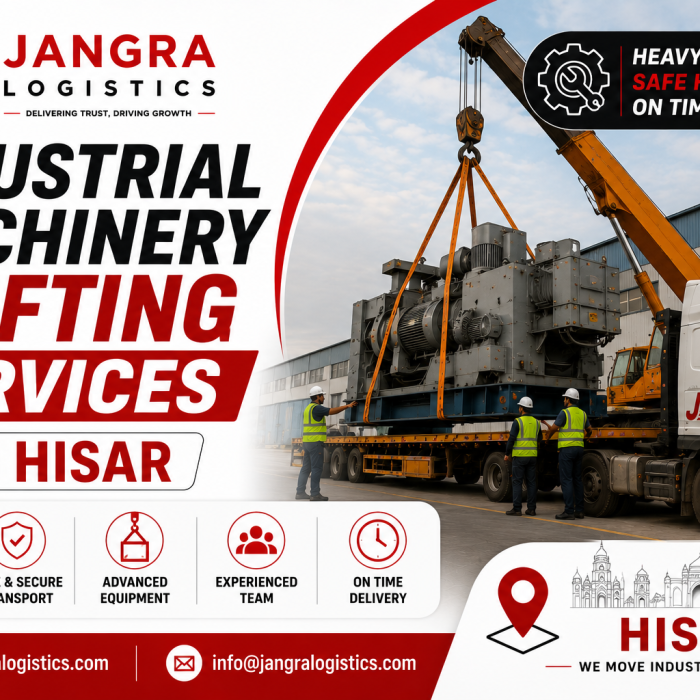
5. Rigging and lifting This is where cranes, gantries, hydraulic jacks, or roller skids come in, depending on the machine’s weight and the site conditions. The lifting points are chosen based on where the machine can actually bear weight, not the most convenient spot.
6. Heavy duty skid packaging For machines being transported any real distance, especially by road over multiple days or by sea for export, the machine gets mounted on a purpose-built skid — a wooden or steel base built to that exact machine’s weight and shape, with bracing at every pressure point and moisture protection where needed. This is the same principle used for marble and stone shipments, just scaled up for machinery.
7. Loading and securing The machine goes onto a flatbed or low-bed trailer depending on its height, and gets strapped down using chains or steel bands rated for its weight — not standard rope, which simply isn’t built for this kind of load.
8. Transport Depending on size, this might need a pilot vehicle for oversized loads, a specific route cleared in advance, and travel during permitted hours only (some cities restrict oversized vehicle movement to night hours).
9. Unloading, positioning, and reassembly At the destination, the machine gets lowered into its exact position — often to a precise alignment, especially for production equipment that needs to connect to existing lines or foundations. Any dismantled parts get reassembled and the machine gets checked before the job is considered complete.
Common Mistakes That Damage Machinery During a Move
We’ve seen every one of these happen, usually because someone tried to save time or money at the wrong step.
- Skipping the load assessment and guessing the weight. This leads to using the wrong lifting equipment, which either fails or damages the machine.
- Using ropes instead of rated chains or straps. Ropes stretch and slip under heavy load — chains and steel bands don’t.
- Not checking the route before moving day. A truck showing up to find it can’t turn into the lane, or the machine doesn’t fit under a bridge, means hours of delay and re-routing on the spot.
- Rushing the dismantling. Removing panels or components in the wrong order can damage internal parts that were protected by that very panel.
- No transit insurance. A damaged machine without insurance is a total loss the factory absorbs alone. This is avoidable for a small added cost.
- Hiring based on the lowest quote alone. The cheapest quote often skips permits, proper rigging equipment, or trained riggers — and the savings disappear the moment something goes wrong.
Heavy Machinery Moving Cost: What Actually Decides the Price
| Factor | How It Affects Cost |
|---|---|
| Machine weight and size | Heavier and larger machines need bigger cranes, trailers, and more manpower |
| Distance | Local moves cost less than interstate; fuel and permits add up over longer routes |
| Dismantling requirement | More parts to remove and reassemble means more labour hours |
| Access difficulty | Narrow gates, upper floors, or no crane access all add cost |
| Permits | Oversized loads crossing state borders need permits that add both time and cost |
| Insurance | Optional, but a small percentage of declared machine value |
There’s no honest way to give a fixed number without seeing the machine and the site. Anyone quoting a heavy machinery move over the phone without asking for photos, weight, and location details is guessing — and that guess usually turns into extra charges on moving day.
What to Check Before You Hire Anyone for Heavy Machinery Moving
Ask these questions before you sign anything:
- Do they do a physical site survey, or just quote over a call?
- Do they own or have access to the right rigging equipment (crane, hydraulic jack, gantry) — or do they rent it last minute?
- Do they handle the permits, or leave that entirely on you?
- Do they provide a written estimate before the job starts?
- Is transit insurance available, and what exactly does it cover?
- Who actually does the dismantling and reassembly — trained riggers, or general labour?
If a company can’t answer these clearly, that’s your answer right there.
How Jangra Logistics Handles Heavy Machinery Moves
Our team does the site survey ourselves before quoting — we don’t guess weight or access over the phone. We handle the full process: load assessment, dismantling where needed, heavy duty skid packaging for the machine itself, rigging with the right equipment for that specific weight, transport permits where required, and reassembly at the destination. One team, start to finish, so nothing gets lost in a handoff between separate contractors.
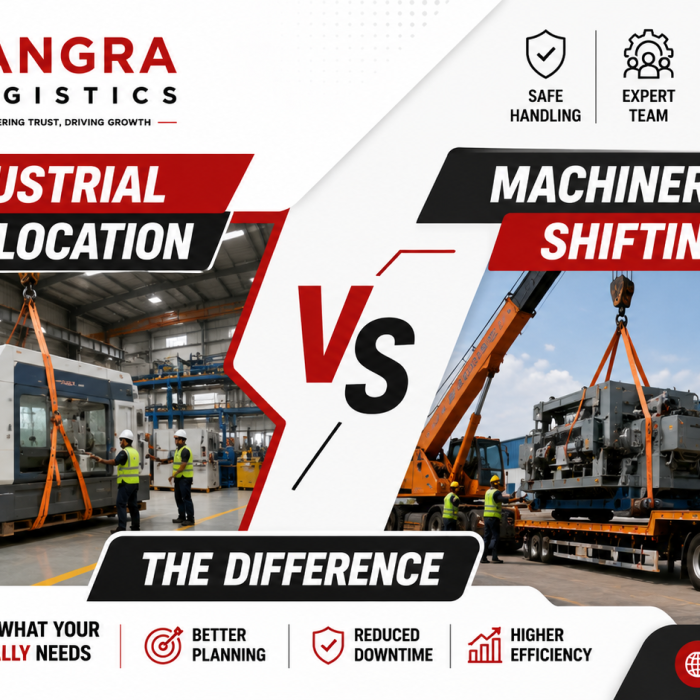
We work across industrial estates and manufacturing hubs including Okhla Industrial Area and Wazirpur in Delhi, MIDC Bhosari and MIDC Chakan in Pune, Udyog Vihar and IMT Manesar in Gurgaon, Peenya Industrial Area in Bangalore, and GIDC Naroda in Ahmedabad — along with factory belts in most other major Indian cities. If you’re planning a full plant relocation or moving a single production line, our industrial shifting services team handles both the heavy machinery and everything else that comes with it — racks, raw material storage, office setup, and the paperwork industrial clients usually need.
Frequently Asked Questions
How long does moving a heavy machine usually take? A single machine move can take anywhere from a few hours to a full day depending on size, dismantling needs, and site access. We’ll give you a real timeline after the site survey, not a guess.
Do you provide the crane or rigging equipment, or do we need to arrange that? We arrange the rigging equipment based on what the machine actually needs. This gets confirmed during the site survey, not decided on the spot.
Can you move machinery to another state? Yes. Interstate moves need transport permits for oversized loads, which we handle as part of the job.
What happens if the machine doesn’t fit through the existing door or gate? This is exactly why route and site survey happens before moving day, not during it. If access is tight, we plan for partial dismantling or an alternate lifting method in advance.
Is insurance included, or is it separate? Transit insurance is optional and available for an added cost based on the machine’s declared value. We’ll explain the coverage clearly at the time of booking.
Can you handle machinery moving as part of a full factory relocation? Yes, this is a large part of what we do. Our industrial shifting team can plan the entire plant move — machinery, storage, office setup — as one coordinated job instead of separate vendors for each part.
Planning a Heavy Machinery Move? Start With a Real Site Survey
Don’t let someone quote your machine’s move over the phone without seeing it. Send us the machine details, photos, and your pickup and destination locations, and our team will schedule a site survey and give you a written estimate — not a guess. Call us or send a WhatsApp message with your move date, and we’ll start planning the survey right away.