Someone books a standard household moving team for their office shift, and by 11 AM the same day, the team is standing around a server rack with no idea how to disconnect it safely, no plan for the 40 workstations still needing to be dismantled, and a business that was supposed to be back online by evening now looking at a two-day delay. This happens more often than you’d think, mostly because “packers and movers” sounds like one single service when it’s actually two very different jobs wearing the same name.
Domestic relocation and commercial relocation share some basics — packing, loading, transport, unloading — but the similarities mostly end there. The planning, the equipment, the timeline pressure, and even the paperwork involved are different enough that booking the wrong type of service is one of the most common and most costly mistakes people make when they’re moving. This post breaks down exactly what separates the two, which one you actually need, and what happens when a move falls somewhere in between.
What Is Domestic Relocation?
Domestic relocation means moving a household — your home, your family’s belongings, furniture, appliances, and personal items — from one residence to another. This covers everything from a single room shift to a full bungalow move, whether it’s local within the same city or long-distance to another state.
The priorities here are personal and practical: careful handling of sentimental or valuable items, flexibility around family schedules, and a process that doesn’t disrupt daily life more than necessary. A home move can usually happen over a weekend or a planned weekday without major consequences if it takes a bit longer than expected.
What Is Commercial Relocation?
Commercial relocation means moving a business — an office, a shop, a warehouse, or any commercial space — including furniture, equipment, files, IT infrastructure, and sometimes machinery. This covers everything from a small office with ten workstations to a full warehouse or factory relocation.
The priorities here shift entirely toward minimizing downtime. A business that’s not operational is losing money every hour, which makes timeline precision, careful handling of IT and sensitive equipment, and coordination around working hours far more critical than they typically are for a home move.
Key Differences Between the Two
Timeline pressure is completely different. A home move can flex by a day without major cost. A business move often has a hard deadline — lease end dates, client commitments, or a Monday morning the office needs to be functional again — making timeline management a much bigger part of the job.
Equipment and expertise needed differ. Domestic moves need careful handling of furniture, appliances, and fragile personal items. Commercial moves often need someone who understands IT infrastructure — disconnecting and labeling server racks, network cabling, and workstations — which is a completely different skill from wrapping a dining table.
Documentation and paperwork vary. Commercial relocation frequently needs GST invoices, asset inventories, and sometimes specific compliance documentation depending on the business type — requirements a standard household move never encounters.
Insurance needs are different in scale. A home move might have a few high-value items worth insuring. A commercial move can involve lakhs of rupees in equipment, IT hardware, and inventory, making comprehensive insurance a bigger part of the planning conversation.
Working hours and access planning differ. Homes are usually accessible whenever convenient for the family. Offices and commercial spaces often have building access restrictions, loading dock timing rules, and sometimes need to be moved during evenings or weekends specifically to avoid disrupting other tenants or ongoing business operations.
Scale of coordination is different. A home move usually involves one point of contact — you. A commercial move often needs coordination across multiple stakeholders — IT teams, department heads, building management, and sometimes clients who need to be informed about downtime.
When You Need Domestic Relocation
- Moving from one home to another, whether local or intercity
- Shifting a single room, a full flat, or a bungalow
- Moving personal belongings, furniture, and household appliances
- No business equipment, IT infrastructure, or commercial documentation involved
When You Need Commercial Relocation
- Moving an office, including workstations, files, and IT equipment
- Relocating a shop, showroom, or retail space
- Shifting a warehouse or storage facility
- Any move where minimizing business downtime is a critical priority
- Moves requiring specific documentation like GST invoices or asset tracking
When Your Move Is Somewhere In Between
Home offices. If you’re running a business from home with server equipment, specialized tools, or significant business inventory alongside your regular household items, you likely need elements of both services — careful furniture handling plus proper IT and equipment handling.
Small businesses moving from a home to a commercial space, or vice versa. This transition often needs a team comfortable with both household items and commercial equipment in the same job.
Factories with an attached residential quarter. Some industrial moves include both machinery relocation and a household shift for on-site staff quarters, needing both skill sets coordinated as one job.
If your situation doesn’t fit neatly into either category, that’s worth mentioning clearly when you book, so the right team and equipment get assigned from the start rather than discovering a mismatch on moving day.
How to Prepare Differently for Each Type of Move
For domestic relocation: Declutter room by room before packing day, keep valuables and documents with you rather than in the general packing pile, and confirm floor and lift access at both locations so the right manpower gets scheduled.
For commercial relocation: Back up all IT systems before disconnection day, label cables and workstations clearly, inform employees and clients about the downtime window in advance, and confirm building access rules — loading dock timing, security clearances, elevator booking — at both the old and new location well before moving day.
Getting this preparation right matters more for commercial moves specifically because the cost of a delay is measured in lost business hours, not just inconvenience.
| Factor | Domestic Relocation | Commercial Relocation |
|---|---|---|
| Typical starting range | ₹2,500 – ₹20,000 (1 BHK to large home) | ₹5,000 – ₹50,000+ (small office to large commercial space) |
| Key cost drivers | Furniture volume, floor access, distance | Equipment value, IT complexity, downtime constraints |
| Timeline flexibility | Usually flexible by a day or two | Often has hard deadlines |
| Insurance emphasis | Optional, for high-value personal items | Often essential, given equipment and inventory value |
| Documentation needs | Minimal | GST invoices, asset inventories, sometimes compliance paperwork |
Commercial moves generally cost more due to equipment value, complexity, and the premium often placed on speed and minimal downtime — but the exact number depends entirely on the specific scale and equipment involved in each case.
Common Mistakes People Make Choosing Between the Two
Booking a standard household team for an office move with IT equipment. This is the single most common mismatch, and it usually shows up as delays and mishandled equipment on moving day, exactly like the server rack scenario at the start of this post.
Underestimating downtime cost when comparing quotes. A slightly cheaper commercial mover isn’t actually cheaper if their process takes an extra day and your business stays closed longer than necessary.
Not mentioning IT infrastructure or specialized equipment upfront. If your office has servers, specific machinery, or sensitive equipment, this needs to be part of the initial conversation, not a surprise discovered on the day of the move.
Assuming all “packers and movers” companies handle commercial moves the same way as household ones. Some genuinely specialize in one or the other — always confirm commercial relocation experience specifically if that’s what your move needs.
Skipping insurance on a commercial move to save cost. Given the typical value of office equipment and inventory, this is a much bigger risk to skip than it would be for a standard household move.
How Jangra Logistics Handles Both
We treat domestic and commercial relocation as genuinely different services, not the same process with a different label. For household moves, our focus is careful handling, flexibility around your schedule, and making the process as smooth as possible for your family. For commercial and office relocations, our team plans around your business hours, handles IT equipment and workstations with the right care and labeling, and works to keep your downtime to a minimum.
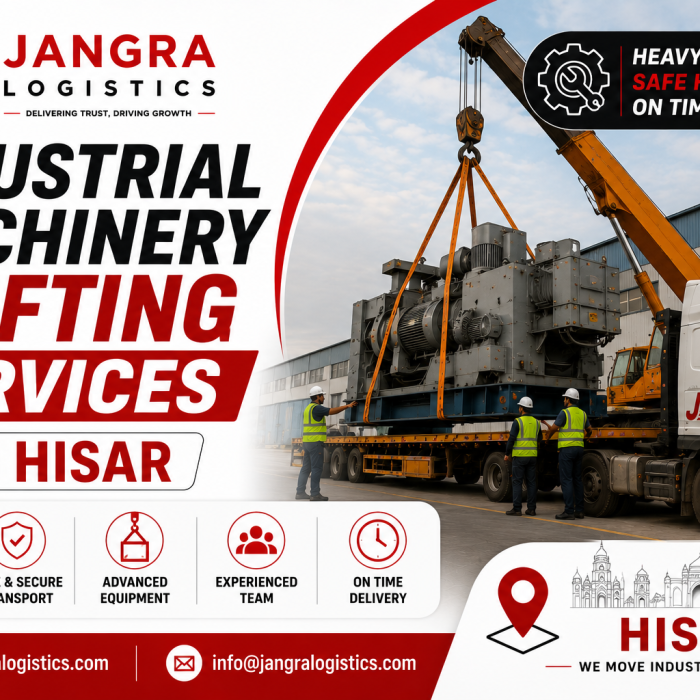
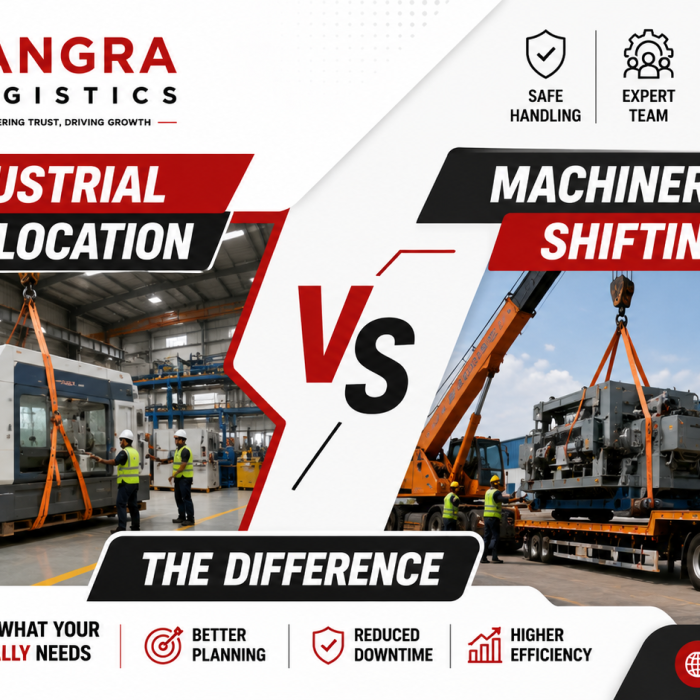
If your move includes heavier machinery, factory equipment, or a full industrial relocation beyond standard office furniture, our industrial shifting services team handles that specifically, with the rigging, load assessment, and permits that kind of move often needs.
If you’re in a smaller city and unsure whether local providers can handle a commercial move properly, our team, and our teams across other Indian cities, handle both domestic and commercial relocation with the specific process each one actually needs, not a one-size-fits-all approach.
At Jangra Logistics, we ask the right questions upfront — what you’re moving, whether IT equipment is involved, what your timeline actually looks like — so the right team and process gets assigned from the start.
Frequently Asked Questions
Is commercial relocation always more expensive than domestic relocation? Generally yes, given the equipment value and complexity typically involved, but the exact cost depends on the specific scale of each move rather than a fixed rule.
Can the same company handle both my home move and my office move? Yes, many companies handle both, but it’s worth confirming they have genuine commercial relocation experience specifically, not just general household moving experience being applied to a business context.
Do I need commercial relocation for a small home-based business? It depends on what you’re moving. If it’s mostly household items with minimal business equipment, standard domestic relocation may be enough. If you have servers, specialized tools, or significant inventory, commercial-level handling is worth considering.
Why does commercial relocation often need to happen outside business hours? To minimize disruption to ongoing operations, clients, or other tenants in a shared building — evening or weekend moves are common specifically to avoid this.
Is insurance more important for commercial relocation than domestic? Given the typical value of office equipment, IT infrastructure, and inventory, insurance is often more critical for commercial moves, though it’s still worth considering for high-value personal items in a domestic move too.
What happens if I book a domestic mover for an office move with IT equipment? You risk delays and improper handling of equipment that needs specific care, like server disconnection and cable labeling — this mismatch is one of the most common causes of a commercial move going badly.
Do commercial moves always need GST invoices and documentation? Often yes, depending on the business type and equipment involved. This is worth clarifying with your mover early, since documentation needs are rarely part of a standard domestic move.
Can a factory or warehouse relocation be considered commercial, or does it need something different? Factory and warehouse moves generally need industrial-level handling — rigging, load assessment, and sometimes permits — which goes beyond standard commercial office relocation and into specialized industrial shifting.
How far in advance should I book a commercial relocation versus a domestic one? Commercial moves generally need more advance planning, given the coordination across IT teams, building access, and timeline pressure — booking a couple of weeks ahead is common, compared to a few days for a straightforward domestic move.
What’s the biggest single risk of choosing the wrong type of service? For domestic moves, it’s usually mishandled personal or fragile items. For commercial moves booked with the wrong team, it’s typically extended downtime and improperly handled equipment, both of which cost far more than the service itself.
Not Sure Which Relocation Service You Actually Need?
Don’t guess based on what “packers and movers” usually means. Tell us what you’re moving — a home, an office, or a mix of both — and we’ll confirm the right process, team, and timeline for your specific situation. Call us or send your details on WhatsApp, and we’ll help you plan a move that actually fits what you need.